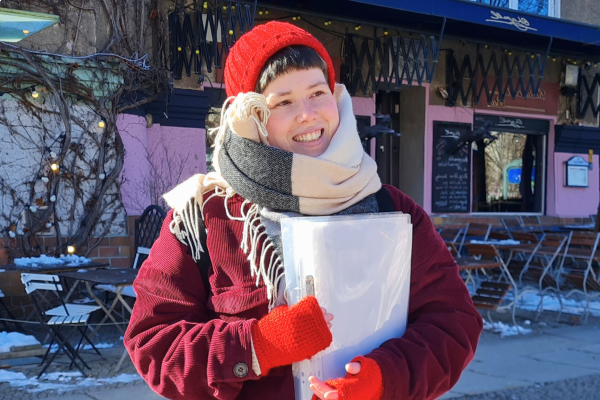
Polina’s tour is a personal story about migration, queerness, and the Russian-Ukrainian war. It’s about a small family finding love and strength in each other as they navigate loss, displacement, and hope. Along the way, Polina will share how community, art, and quiet acts of caring have helped to rebuild a new life — one step (across the border) at a time.
- Stories of migration
- Queer love in the time of war
- personal story about migration, queerness, and the Russian-Ukrainian war
| Duration | 2 Hours |
|---|---|
| Participants | f fewer than six participants register for the tour, we reserve the right to cancel the city tour. We ask for your understanding. In this case, any amounts already paid will be refunded in full. |
| Important information | Participation of representatives of the press Some tours may be attended by representatives of the press. We will of course inform you about this at the start of the respective tour. If you do not wish to appear on any photo material, this will of course be respected and taken into account accordingly. Tour cancellation If fewer than six participants register for the tour, we reserve the right to cancel the city tour. In this case, any amounts already paid will be refunded in full. |
Further information
Polina and her girlfriend were just about to spend their first holiday together when the Russian war of aggression against Ukraine began. Stranded in Hungary, the young couple find themselves in a situation where everything is in question. What about our families? Can we go back? Do we still want to live in Russia? Polina realizes: ‘We have to go to Berlin, it’s the city where miracles happen’. And so, the holiday turns into the migration of a young Russian-Ukrainian queer couple from Moscow to Berlin.
On her tour through Prenzlauer Berg, Polina takes us to places where she has made connections in Berlin and shows us organizations that have supported her. Along the way she reflects on queer life in Russia, the imperialist endeavors of her home country, her own migration history and the pitfalls of German bureaucracy.
Polina tells an exciting story that shows that love knows no borders and can be stronger than war. Although she never forgets the fate of those who fight for freedom, it is a story that makes us think and gives us hope.
